Instructional Design Theories
Instructional design refers to the systematic and reflective process of translating principles of learning and instruction into plans for instructional materials, activities, information resources, and evaluation. (Smith and Ragan, 1999)
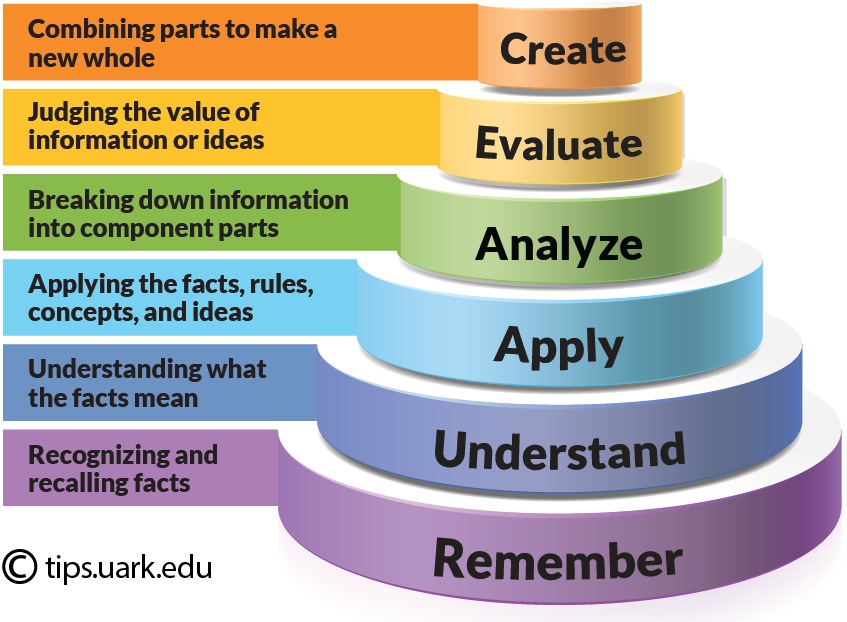
In the 1950s Bloom helped developed a taxonomy of cognitive objectives in
“Taxonomy of Educational Objectives,Cognitive Domain”
Means of expressing qualitatively different kinds of thinking Been adapted for classroom use as a planning tool and continues to be one of the most universally applied models Provides a way to organise thinking skills into six levels, from the most basic to the more complex levels of thinking
1. The ADDIE model
is used by instructional designers and training developers. It is composed of five phases
- Analysis,
- Design,
- Development,
- Implementation, and
- Evaluation

2 .Kemp Design Model
The Kemp Design Model consists of 9 steps:
1. Identify instructional problems, and specify goals for designing an instructional program.2. Examine learner characteristics that should receive attention during planning.
3. Identify subject content, and analyze task components related to stated goals and purposes.
4. State instructional objectives for the learner.
5. Sequence content within each instructional unit for logical learning.
6. Design instructional strategies so that each learner can master the objectives.
7. Plan the instructional message and delivery.
8. Develop evaluation instruments to assess objectives.
9. Select resources to support instruction and learning activities.

3.A learning community
is a group of people who share common academic goals and attitudes, who meet semi-regularly to collaborate on classwork. Such communities have become the template for a cohort-based, interdisciplinary approach to higher education.


Comments
Post a Comment